 Schedule a Service


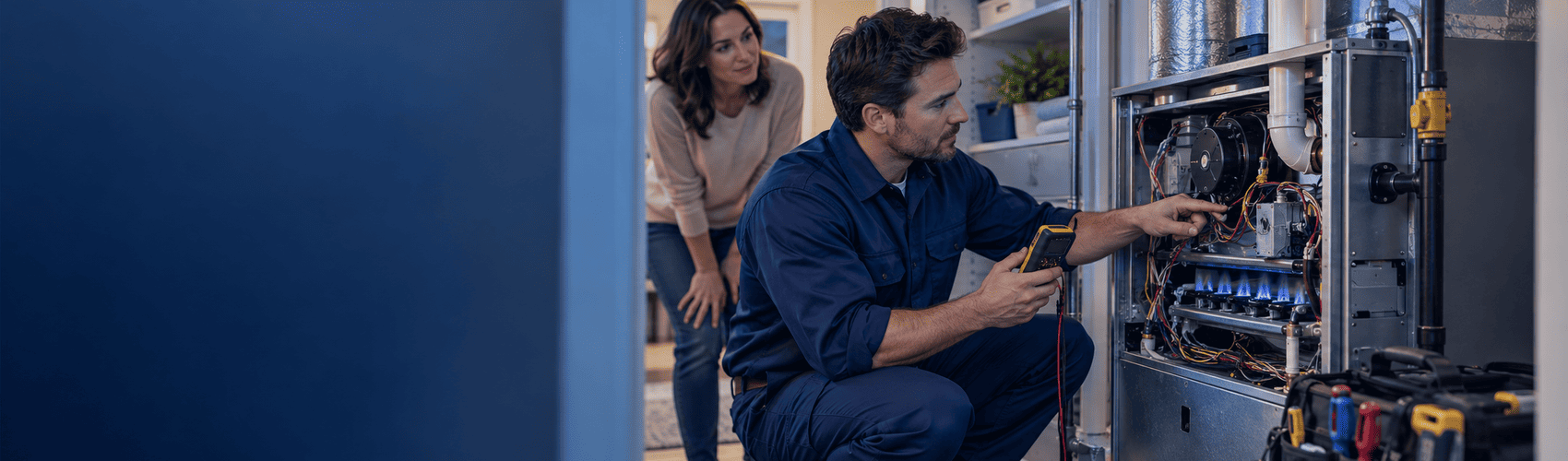
When a North Texas “Blue Norther” cold front sweeps through Carrollton and your furnace suddenly stops blowing warm air, you aren’t searching the internet out of academic curiosity. You already know something is wrong, and you’re preparing to call a professional technician.
However, authorizing a repair quote without asking the right questions can leave you feeling like you signed a blank check.
A trustworthy, professional HVAC technician welcomes clear, informed questions. Asking targeted questions before approving a furnace repair helps you understand the exact component failure, verifies transparent pricing, and prevents repeat breakdowns later in the winter. Before signing an estimate or authorizing work on your heating system, ask these seven essential questions.
Key Questions & Diagnostic Overview
| Question to Ask | Why It Matters | What to Look For in the Answer |
| 1. What exact component failed? | Avoids vague diagnoses and unneeded part swaps | Clear technical explanation of the specific component |
| 2. Is this the only issue? | Identifies underlying stress or collateral damage | System-wide assessment beyond the primary failure |
| 3. What does the estimate include? | Prevents surprise fees on the final bill | Itemized breakdown of parts, labor, fees & warranties |
| 4. Repair or replace the part? | Ensures you don’t pay for unnecessary replacements | Honest advice on cleaning/calibrating vs. installing new |
| 5. How long will the repair take? | Sets realistic expectations for restoring heat | Part availability and estimated labor timeframe |
| 6. Is it safe to run in the meantime? | Protects family safety and prevents major damage | Clear safety guidance regarding CO, gas, and fire risks |
| 7. What caused this to fail? | Prevents repeat breakdowns later in the season | Root-cause analysis (airflow, electrical, dirt buildup) |
1. What Exactly Is Wrong With My Furnace?
“Your furnace is broken” or “it needs a repair” is a vague statement, not a diagnostic explanation. Modern gas furnaces and heat pumps are complex mechanical systems made up of specialized electrical and safety components. You deserve to know precisely which part failed to operate correctly.
Ask the technician to name the specific component and explain its function in plain language. Common culprits behind furnace failures include:
- Hot Surface Igniters: The silicon carbide element that glows hot to ignite natural gas burners, which can crack from thermal fatigue over time.
- Flame Sensors: The metallic safety rod that confirms a burner flame is active, which often stops signaling due to microscopic carbon buildup.
- Draft Inducer Motors: The fan motor that clears toxic combustion gases from the heat exchanger before ignition occurs.
- Pressure Switches: Safety controls that verify proper draft airflow before allowing gas valves to open.
- Blower Capacitors and Motors: Electrical components that drive heated air out of your attic air handler into your living rooms.
A knowledgeable technician can easily show you the failed part and explain how its failure disrupted your home’s heating cycle.
2. Is This the Only Problem You Found?
Furnace components do not operate in isolation. Quite often, a primary component fails as a direct result of secondary stress elsewhere in the system.
For example, if your furnace keeps tripping its high-limit safety switch, replacing the switch won’t solve the underlying problem if the real culprit is a clogged air filter or a failing blower motor causing severe internal overheating. Similarly, a blown low-voltage transformer might be the result of a shorted gas valve solenoid.
Asking whether additional issues were detected ensures that the technician evaluated your heating system as a whole rather than simply swapping out the most obvious broken part. Resolving secondary wear during the same visit prevents a second emergency call two weeks later.
3. What Does the Furnace Repair Estimate Include?
A written repair estimate should be clear, detailed, and completely transparent. Before approving any work, verify exactly what costs are covered in the quoted line items.
A thorough furnace repair estimate should explicitly break down:
- Replacement Parts: The cost of original equipment manufacturer (OEM) or high-grade compatible parts.
*
- Labor Charges: Flat-rate labor fees for removing the defective component, installing the new part, and re-testing system controls.
*
- Diagnostic Fees: Clarification on whether the initial diagnostic trip fee is applied toward the final repair cost.
*
- Additional Servicing: Any required adjustments, such as cleaning burner assemblies, calibrating gas pressure, or flushing condensate drain lines.
*
- Warranty Coverage: The specific manufacturer warranty on the new part alongside the contractor’s labor guarantee.
*
Asking for a complete breakdown upfront protects you from unexpected add-ons or hidden “overtime” fees when the job is completed.
4. Does This Part Need to Be Replaced or Can It Be Repaired?
Not every furnace malfunction requires brand-new equipment or expensive replacement parts. In many cases, minor maintenance or precision calibration can restore proper operation at a fraction of the cost.
A classic example is the flame sensor. When carbon oxidation builds up on a flame sensor, the furnace will ignite for three seconds and shut off automatically for safety. Replacing the sensor is sometimes recommended, but in most cases, carefully cleaning the rod with fine steel wool removes the oxidation and restores full operation instantly.
Conversely, components like cracked hot surface igniters, shorted circuit boards, or leaking gas valves cannot be safely repaired and must be replaced. Asking this question confirms whether the technician is focused on practical, cost-effective solutions or simply replacing parts unnecessarily.
5. How Long Should This Repair Take?
When your house is steadily losing heat, timing matters. Knowing how long the repair will take allows you to plan accordingly, whether that means staying home during a short service window or making temporary heating arrangements for your family.
Most common furnace repairs—such as replacing igniters, flame sensors, run capacitors, or pressure switches—can be completed in 1 to 2 hours if the technician carries the required part on their service truck.
If the repair requires a specialized, brand-specific control board or draft motor, the technician may need to source the part from a local Carrollton HVAC supply house. Asking for a realistic timeline sets clear expectations regarding part availability and labor duration.
6. Is It Safe to Keep Using the Furnace Until the Repair?
If your furnace is still producing intermittent heat or making unusual noises, you need to know whether running it poses a safety risk to your home.
Gas furnaces combine high-voltage electricity, combustible natural gas, and high operating temperatures. Running a malfunctioning unit can sometimes turn a minor fix into a severe safety hazard or cause catastrophic damage to the heat exchanger.
Immediate safety concerns that require turning the furnace off completely include:
- Soot or Yellow Burner Flames: Signals incomplete combustion, which can release dangerous carbon monoxide into your indoor air.
- Burning Metallic or Electrical Odors: Indicates overheating motor windings, melted wire insulation, or severe electrical arcing.
- Repeated System Safety Lockouts: Continuing to reset a furnace that shuts down repeatedly can force unburned gas into the combustion chamber.
If the technician advises shutting the system down until the repair is completed, follow their guidance and leave the main gas supply valve or breaker switch turned off.
7. Is There Anything That Could Cause the Same Problem Again?
Replacing a broken part fixes the symptom, but identifying the root cause prevents the failure from happening again. Asking this question shifts the focus from emergency repair to long-term preventative care.
Common root causes behind recurring furnace breakdowns include:
- Restricted Airflow: Dense, dirty, or incorrectly rated air filters restrict airflow across the furnace, causing high static pressure that overheats blower motors and trips limit switches.
- Blocked Return Vents: Closing supply registers or blocking return air grilles in unused rooms forces the furnace to operate under excessive thermal stress.
- Neglected Seasonal Cleaning: Dust accumulating on burner orifices or draft impellers disrupts smooth gas ignition.
- Miscalibrated Thermostats: Outdated or faulty thermostat wiring can send rapid, erratic signals that short-cycle the furnace burners.
Understanding what triggered the initial breakdown helps you take simple maintenance steps to protect your heating system for the rest of the winter.
What Information Should You Have Ready Before Calling for Furnace Repair?
To help your HVAC service provider dispatch the right technician with compatible replacement parts, gather a few basic details about your heating system before placing the call:
- Furnace Brand and Model Number: Usually found on a label inside the removable furnace burner door or on the outer air handler cabinet.
- Approximate System Age: Knowing whether your unit is 5, 10, or 15+ years old helps the technician evaluate part availability and warranty status.
- Specific System Behavior: Note whether the unit is blowing cold air, short-cycling every few minutes, or failing to respond to the thermostat.
- Error Codes: Many modern gas furnaces feature a small glass sight port on the lower panel where an LED light blinks specific diagnostic flash codes (e.g., 3 red flashes).
- Unusual Sounds or Smells: Note any loud banging, squealing, rattling, or burnt metallic smells occurring when the system attempts to start.
- Thermostat Display Status: Check whether the thermostat screen is active, showing low battery warnings, or displaying specific system error alerts.
What Happens During a Furnace Repair Estimate Visit?
Understanding the standard diagnostic process removes mystery from the service visit and ensures you know what to expect from arrival to completion:
- Initial Symptom Review: The technician reviews your observations, checks your thermostat settings, and inspects the electrical panel.
- Physical & Safety Inspection: The technician opens the furnace cabinet to check burner assemblies, inspect wiring connections, test safety limit switches, evaluate gas pressure, and check the heat exchanger for stress cracks.
- Diagnostic Testing: Using digital multimeters, manometers, and combustion analyzers, the technician pinpoints the exact electrical, mechanical, or gas flow failure.
- Itemized Quote Presentation: The technician presents a clear, written flat-rate estimate outlining the exact scope of repair, required parts, labor, and warranty terms.
- Homeowner Approval: Work begins only after you review the estimate, ask your questions, and approve the quoted flat rate.
- Precision Repair & Safety Re-Test: The technician installs the new component, cleans surrounding controls, and runs the furnace through a full heating cycle to verify safe combustion and steady airflow.
Schedule Reliable Furnace Repair in Carrollton, TX
When your home heating system fails in the middle of winter, you don’t have to navigate repairs alone or settle for vague answers. Harlen Johnson HVAC, Plumbing & Electrical has provided Carrollton and Dallas-area homeowners with transparent diagnostics, master craftsmanship, and upfront flat-rate pricing since 1957.
As a dual-licensed provider in HVAC, plumbing, and electrical, our certified technicians troubleshoot and repair all furnace makes and models with zero high-pressure sales tactics and zero hidden surprise fees.
If your furnace is blowing cold air, making strange noises, or failing to ignite, call Harlen Johnson HVAC, Plumbing & Electrical today at 972-241-7771 to schedule your professional diagnostic repair in Carrollton, TX!
Frequently Asked Questions
What should I do if my furnace is blowing cold air in the middle of winter?
Check your thermostat to confirm it is set to “Heat” and “Auto” rather than “On.” If the settings are correct, inspect your air filter for heavy dust clogging. If the filter is clean, turn off the system at the thermostat or breaker box and call a licensed technician, as blowing cold air usually points to a failed igniter, dirty flame sensor, or tripped safety limit switch.
How do I know if my furnace repair estimate is fair?
A fair estimate should clearly itemize replacement parts, flat-rate labor charges, warranty coverage, and diagnostic fees before work begins. Honest contractors do not use vague “lump sum” pricing or pressure you into approving repairs before explaining what failed and why.
Can a dirty air filter cause my furnace to shut down?
Yes. A clogged air filter chokes airflow across the furnace heat exchanger. Without proper airflow, internal temperatures rise rapidly, triggering the high-limit safety switch to turn off the burners to prevent a fire or heat exchanger damage.
How quickly can a technician respond to a furnace repair call in Carrollton?
During extreme cold weather snaps, urgent heating calls are prioritized. Licensed technicians equipped with common service parts can typically provide same-day or 24/7 emergency dispatch across Carrollton and surrounding North Texas communities.
Is it safe to leave a malfunctioning furnace running while waiting for a repair?
If your furnace is producing unusual burning odors, loud rattling noises, flickering yellow burner flames, or shutting off repeatedly, turn it off immediately. Running a damaged furnace can cause severe electrical damage, gas accumulation, or dangerous carbon monoxide leaks.