 Schedule a Service


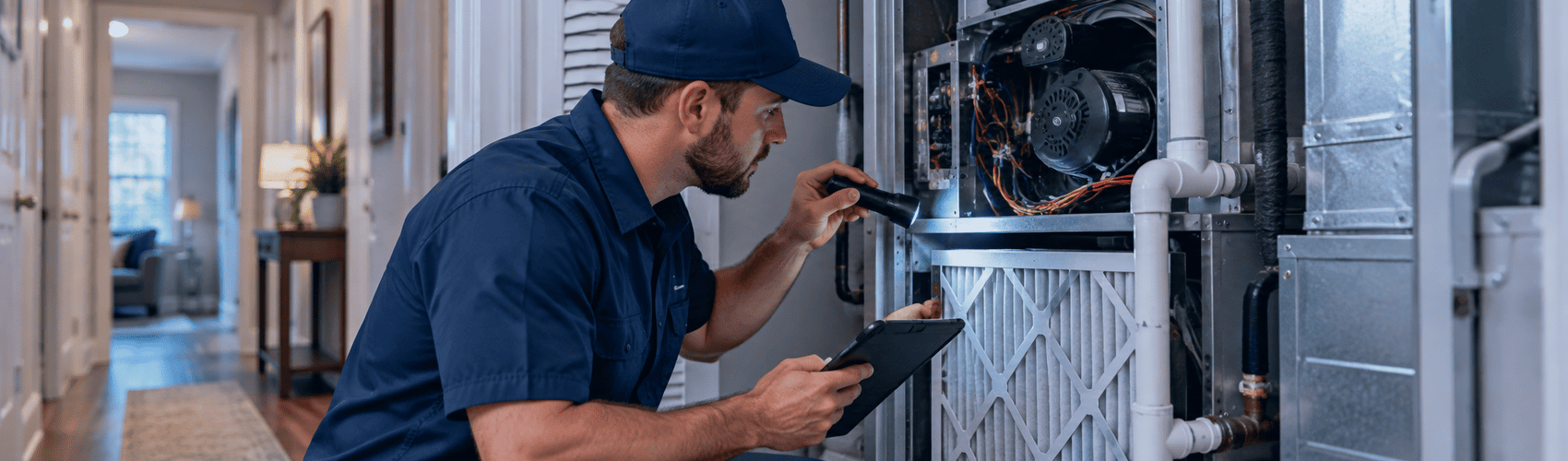
It is a quiet Tuesday morning in May, and your air conditioner hums along just fine while cooling your home. But beneath the metal casing of your outdoor condenser, a dual-run capacitor has drifted out of electrical tolerance, a thick layer of spring pollen is choking heat transfer across the aluminum fins, and a slow accumulation of algae is quietly settling inside the primary condensate drain line.
In this article, we will examine how routine HVAC maintenance in Richardson TX identifies hidden mechanical wear before North Texas heatwaves or sudden winter cold snaps turn minor issues into expensive emergency calls. In established neighborhoods where heating, cooling, ductwork, and controls have often been updated at different times, inspecting your entire system ensures every component continues working smoothly together.
HVAC Maintenance Overview
| System Component | What Maintenance Inspects | What Early Tune-Ups Protect |
| Electrical Capacitors | Microfarad output and terminal tightness | Prevents sudden motor startup failure and hard-starting |
| Condenser Coils | Debris accumulation, fin condition, heat release | Restores cooling efficiency and lowers monthly electric bills |
| Blower Assembly | Motor amperage, wheel balance, static pressure | Protects indoor air volume and prevents motor overheating |
| Condensate Drain Line | Water flow, trap cleanliness, safety float switch | Prevents ceiling water damage and float switch lockouts |
| Furnace Ignition & Burners | Flame sensor oxidation, igniter resistance, gas draft | Prevents winter heating lockouts and incomplete combustion |
| Thermostat Controls | 24V wiring connections, sensor calibration | Prevents short-cycling and erratic temperature swings |
Key Takeaways
- HVAC maintenance focuses on inspecting, cleaning, and testing a functional system to prevent unexpected mechanical failures.
- Catching minor component wear early—such as a weak capacitor or a dirty flame sensor—is significantly cheaper than replacing burned-out blower motors or compressors.
- Established Richardson homes with mixed-age equipment benefit from whole-system inspections that evaluate how ductwork, controls, and units interact.
- Pre-season tune-ups before summer and winter ensure your heating and cooling equipment handles seasonal demand spikes reliably.
What Does HVAC Maintenance Include?
Professional HVAC maintenance is a comprehensive, multi-point operational inspection designed to verify that your heating and cooling equipment operates safely and efficiently. A complete tune-up covers:
- Filter & Airflow Inspection: Checking air filter cleanliness, evaluating blower wheel condition, and measuring static pressure across the system.
- Electrical System Testing: Measuring capacitor microfarads, checking contactor pitting, tightening electrical terminals, and testing motor amperage.
- Coil Cleaning & Inspection: Removing dust, pollen, and debris from outdoor condenser coils to maintain proper heat dissipation.
- Condensate Line Flushing: Clearing algae, sediment, and buildup from indoor drain pans and drain lines to prevent water backups.
- Heating & Safety Verification: Cleaning furnace flame sensors, inspecting hot-surface igniters, checking gas pressure, and verifying heat exchanger integrity.
- Thermostat Calibration: Testing low-voltage control signals, verifying temperature sensors, and confirming proper cycling modes.
7 Signs Your HVAC May Be Overdue for Maintenance
- Your System Runs Longer Than It Used To: The air conditioner or furnace runs continuously for hours without reaching your target temperature.
- Airflow Feels Weaker at the Vents: Air volume coming out of supply registers feels faint, leaving distant rooms stuffy and warm.
- Your Monthly Energy Bills Are Creeping Up: Electric or gas consumption rises without a matching shift in local weather, indicating reduced system efficiency.
- Some Rooms Feel Less Comfortable Than Others: Temperature gaps develop between living areas, upstairs bedrooms, or back home offices.
- The System Makes New Noises: You notice new rattles, hums, squeals, or clicking sounds when the equipment starts up or shuts down.
- The Unit Cycles On and Off Frequently: The system turns on for short periods, shuts off abruptly, and restarts moments later.
- Nobody Remembers the Last Maintenance Visit: Assuming equipment is fine simply because it turned on today is not a substitute for a documented maintenance history.
What Can HVAC Maintenance Catch Early?
Catching minor component degradation during a planned tune-up prevents chained mechanical failures later.
| Early Finding | What It Could Prevent |
| Weak Run Capacitor | Compressor hard-starting, fan motor burnout, and mid-summer cooling failure |
| Dirty Outdoor Condenser Coil | High operating pressure, excessive power consumption, and compressor overheating |
| Clogged Air Filter or Restricted Airflow | Frozen evaporator coils during summer or furnace limit switch lockouts during winter |
| Algae Buildup in Drain Line | Overflowing condensate pans, ceiling drywall damage, and float switch shutdowns |
| Oxidized Furnace Flame Sensor | Gas burners lighting briefly and immediately shutting down on a cold night |
| Pitted Contactor Relay | Sticking electrical contacts that keep the outdoor compressor running continuously |
Maintenance cannot make mechanical equipment immortal. However, it provides early warning before a worn part turns into a sudden heating or cooling emergency.
Why Richardson HVAC Systems Can Age at Different Speeds
In established Richardson neighborhoods, municipal records show that over 44% of local housing was constructed prior to 1980. Over the years, these properties have undergone various stages of updates and floor plan modifications.
It is common for a Richardson home to feature an outdoor AC condenser installed four years ago operating alongside a gas furnace installed ten years ago, controlled by a smart thermostat added last spring, and connected to ductwork configured during an earlier remodel. Because these individual pieces age at different rates, routine HVAC maintenance evaluates how the entire setup operates as a single network rather than assuming the newest or oldest unit is the only factor.
HVAC Maintenance Before Richardson Summer
The first brutally hot afternoon in June should not double as your air conditioner’s annual inspection. Pre-summer AC tune-ups prepare your cooling equipment for long periods of high heat:
- Clearing Outdoor Coil Obstructions: Removing lawn clippings, leaves, and dust so the condenser can release indoor heat efficiently.
- Verifying Refrigerant Charge: Measuring operating pressures to identify minor pinhole leaks before peak summer demand.
- Testing Startup Components: Inspecting capacitors and relays so your compressor starts smoothly on 100°F days.
- Flushing Condensate Lines: Ensuring secondary drain pans and safety float switches function properly to prevent water overflows.
HVAC Maintenance Before Winter
A gas furnace or heat pump can sit completely quiet for six months and then be asked to perform flawlessly on the first freezing North Texas night. Pre-winter heating tune-ups focus on safety and smooth ignition:
- Cleaning Combustion Burners & Flame Sensors: Removing carbon deposits so burners ignite cleanly without delayed ignition pops.
- Inspecting the Heat Exchanger: Checking steel combustion walls for cracks or rust perforation that could compromise safety.
- Testing Heat Pump Reversing Valves: Confirming that heat pump systems transition smoothly from cooling to heating mode.
- Verifying Safety Shutoff Switches: Testing draft pressure switches and high-limit controls to ensure they respond correctly to abnormal conditions.
Maintenance vs. Repair: What’s the Difference?
Understanding the distinction between routine maintenance and diagnostic repair helps set clear expectations:
- Maintenance asks: “What component is starting to show wear or lose efficiency while the system is still running?”
- Repair asks: “What specific component has already failed or caused the system to stop working?”
Preventive maintenance cleans, adjusts, and tests an operational system to preserve performance. If a tune-up reveals a severely worn capacitor or pitted contactor, replacing that part during the visit prevents a future repair call.
Does HVAC Maintenance Help With Uneven Temperatures?
Yes, but with realistic boundaries. Seasonal maintenance can resolve uneven temperatures when the root cause is operational—such as clearing a dirty evaporator coil, replacing a clogged filter, or servicing a failing blower motor capacitor.
However, if room temperature variations stem from architectural limits—such as uninsulated attic ductwork, lack of return grilles in closed bedrooms, or improper duct sizing—maintenance will identify the airflow restriction, but solving it may require targeted ductwork balancing or zoning adjustments.
What Happens During an HVAC Maintenance Visit?
- Reviewing Operating History: Asking about recent utility bill changes, temperature swings, or unusual sounds.
- Inspecting Airflow & Filters: Checking filter condition, inspecting blower assemblies, and measuring airflow.
- Evaluating Electrical Controls: Testing capacitor microfarads, checking voltage drops, and tightening electrical connections.
- Cleaning Coils & Drain Lines: Clearing outdoor condenser fins and flushing condensate drain pans.
- Testing Heating & Safety Sequence: Checking furnace ignition, flame rod current, and draft pressure switches.
- Providing Clear Recommendations: Explaining any developing component wear and testing overall operating efficiency.
Can Maintenance Reduce Emergency HVAC Calls?
Regular maintenance reduces the risk of preventable breakdowns by catching electrical drift, dirt buildup, and drain blockages early. While a tune-up cannot prevent unexpected component defects, identifying wear during spring or fall significantly lowers the likelihood of a mid-season shutdown.
Schedule HVAC Maintenance in Richardson Before the Small Problem Gets Loud
Your heating and cooling system does not need to suffer a complete failure before it deserves attention. Weak airflow, longer run times, minor electrical shifts, or subtle efficiency drops are far easier to resolve before summer heatwaves or winter cold snaps place your equipment under heavy demand. Give your household steady, year-round peace of mind by calling the local specialists who have been servicing North Texas homes since 1957. Reach Harlen Johnson HVAC, Plumbing & Electrical at 972-241-7771 to schedule your HVAC maintenance in Richardson TX today!
Frequently Asked Questions About HVAC Maintenance in Richardson, TX
What does HVAC maintenance include?
HVAC maintenance includes a thorough multi-point inspection of your heating and cooling equipment—including filter checks, electrical capacitor testing, condenser coil cleaning, condensate drain line flushing, flame sensor cleaning, safety switch testing, and overall airflow evaluation.
Is HVAC maintenance really necessary?
Yes. Regular maintenance removes dirt buildup, identifies worn electrical components before they fail, maintains operating efficiency, lowers monthly energy bills, and protects manufacturer warranty coverage.
Can maintenance prevent AC breakdowns?
Maintenance prevents many common causes of sudden failure—such as clogged drain lines, dirty coils, and weak capacitors. While it cannot prevent every possible component failure, it significantly reduces unexpected breakdowns.
Does HVAC maintenance include the furnace?
Yes. Comprehensive maintenance covers both cooling and heating systems, including gas furnace burner cleaning, heat exchanger safety checks, igniter inspection, and flame sensor service.
Can maintenance improve weak airflow?
If weak airflow is caused by a dirty air filter, a fouled evaporator coil, or a slipping blower motor capacitor, maintenance will restore proper air movement across your vents.
Why is my HVAC running longer than before?
Extended run times are often caused by restricted airflow from dirty filters, dirty condenser coils that cannot release heat, low refrigerant levels, or an aging compressor struggling to maintain pressure.
Is maintenance the same as HVAC repair?
No. Maintenance inspects, cleans, and tunes an operational system to preserve performance. Repair specifically diagnoses and fixes equipment that has already broken down or stopped functioning correctly.
When should I schedule HVAC maintenance in Richardson, TX?
Homeowners typically schedule cooling maintenance in early spring before summer heat arrives, and heating maintenance in early fall before winter cold snaps hit North Texas.
Can an older Richardson home benefit from HVAC maintenance?
Yes. Established homes with mixed-age equipment, modified floor plans, or older ductwork benefit greatly from whole-system inspections that ensure all components operate safely and efficiently together.
Does Harlen Johnson provide HVAC maintenance in Richardson, TX?
Yes. Harlen Johnson HVAC, Plumbing & Electrical provides comprehensive HVAC maintenance across Richardson and surrounding North Texas communities for both residential heating and cooling systems.