 Schedule a Service


You’re standing in your hallway in thick socks, staring at a thermostat that says 64° even though you set it to 72° two hours ago. Every few minutes, the furnace in the attic clicks, hums like a jet engine warming up on the runway, blows a pathetic whisper of lukewarm air from the ceiling vents, and gives up. You know it’s time for a new furnace, but calling an HVAC company can feel like walking into an auto repair shop with your eyes closed—you just want warm air, not a confusing sales pitch filled with technical jargon and surprise charges.
Installing a new furnace isn’t as simple as buying a new microwave, bringing it home, and plugging it into the wall. It’s an engineered mechanical system that has to match your home’s exact square footage, duct layout, gas pressure, and electrical capacity.
Getting the details right before installation day ensures your home stays warm on freezing winter nights, keeps your monthly gas bills reasonable, and protects your equipment from breaking down five years early. Here are the seven key things you need to know before approving a new furnace installation.
Key Takeaways: Pre-Installation Overview
| Installation Factor | What You Need to Know | Why It Matters for Your Home |
| System Sizing (BTU) | Calculated via Manual J heat load test | Prevents non-stop running or aggressive short-cycling |
| Fuel Source | Natural gas vs. Electric heat strips | Matches your existing gas line and breaker panel capacity |
| Duct Compatibility | Checking static pressure and return grilles | Keeps new blower motor from choking and overheating |
| Efficiency (AFUE) | 80% standard vs. 90%+ condensing units | Balances equipment cost with monthly gas bill savings |
| Installation Time | 4 to 8 hours for direct swaps | Minimizes downtime so your house stays warm |
| Safety Checks | Gas leak tests, draft venting, float switches | Protects against carbon monoxide and water leaks |
1. What Does a Furnace Actually Do in Your HVAC System?
Most homeowners point to the closet or attic unit and call the whole setup “the AC,” but during winter, your furnace takes center stage.
In a standard central HVAC setup, your furnace handles two distinct jobs:
- Generating Thermal Heat: When the thermostat signals for heat, gas burners ignite inside a sealed heat exchanger (or electric heat strips energize) to create warm air.
- Circulating Whole-Home Airflow: The furnace cabinet houses the primary blower motor. This fan operates year-round—pushing warm air through your ducts during winter and circulating chilly air from your evaporator coil during July heatwaves.
Because the furnace houses the main blower motor responsible for year-round airflow, choosing the right furnace ensures your air conditioner cools efficiently in summer, too.
2. What Size Furnace Does Your Carrollton Home Need?
Picking a furnace size isn’t like buying a coat where you can just grab a “Medium” and hope for the best. Heating capacity is measured in BTUs (British Thermal Units), and getting the sizing wrong will ruin your home’s comfort.
If a furnace is undersized, it will run continuously on 25° nights without ever reaching the temperature set on your thermostat. If it’s oversized, it will blast scorching air into your rooms in five-minute bursts, shut off abruptly before pulling humidity out of the air, and short-cycle its internal safety switches to an early grave.
Professional contractors determine exact furnace sizing using an industry-standard Manual J Heat Load Calculation:
| Sizing Variable | What the Tech Evaluates | Impact on Furnace Selection |
| Home Envelope & Size | Square footage, ceiling height, insulation depth | Determines total air volume requiring heat |
| Solar & Glass Load | Window orientation, pane glass, sun exposure | Accounts for rapid heat loss along west-facing walls |
| Layout & Airflow Dynamics | Two-story heat rise, unconditioned attic space | Prevents freezing bedrooms upstairs while downstairs overheats |
| Manual J Result | Exact BTU Heating Capacity | Delivers even warmth without short-cycling or blowing electric bills |
3. Gas Furnace or Electric Furnace: Which Fits Your Home?
The fuel source powering your new furnace depends heavily on your home’s existing utility infrastructure, neighborhood setup, and overall HVAC design.
Natural Gas Furnaces
Natural gas is the most popular heating choice in Carrollton due to its rapid heat output and low operating costs during cold snaps. Gas furnaces use electronic igniters to fire gas burners inside a sealed metal heat exchanger. Installing a gas furnace requires an existing gas line, metal exhaust flue venting through the roof, and standard electrical connections for the control board.
Electric Furnaces (Air Handlers)
Electric furnaces use high-resistance heating element coils (electric heat strips) to warm the air. While electric air handlers cost less upfront and require no gas piping or exhaust flues, they draw significant electrical current. Electric heating is most common in homes without natural gas access or when paired with an outdoor heat pump as an auxiliary heat source.
4. Does Your Existing Ductwork Work With the New Furnace?
You can buy the most advanced, high-tech furnace on the market, but if you hook it up to crushed, leaking, or undersized ductwork, your new system will choke. Your ductwork acts as the lungs of your home.
Before installing a new unit, a technician should inspect your duct system for three common bottlenecks:
- Undersized Return Air Grilles: Modern furnace blower motors push higher air volumes than older units. If your return vents are too small, the blower motor struggles to breathe, creating high static pressure that causes the furnace to run loudly and overheat.
- Leaky Attic Ducts: Sagging, torn, or unsealed flex ducts in unconditioned attics dump warm air into the attic space while pulling dusty attic air straight into your bedrooms.
- Imbalanced Branch Lines: Disconnected or poorly proportioned branch ducts leave front living rooms warm while back bedrooms stay freezing cold.
Addressing ductwork issues during installation protects your new furnace blower motor and ensures even temperatures across every room.
5. What Furnace Efficiency Rating Should You Choose?
Furnace efficiency is rated by AFUE (Annual Fuel Utilization Efficiency), which measures what percentage of natural gas is converted into usable heat versus what is wasted up the exhaust vent.
| Furnace Efficiency Tier | AFUE Rating | How Exhaust Fuel Is Handled | Venting & Infrastructure Needs |
| Standard Efficiency | 80% AFUE | 80% heat into home, 20% escapes via chimney | Uses standard metal flue pipe through the roof |
| High-Efficiency Condensing | 90%–98% AFUE | Reclaims heat from exhaust gas before venting | Requires PVC exhaust pipes and condensate drain lines |
- Standard 80% AFUE Furnaces: Lower upfront cost and a direct fit for standard metal chimney flues. They convert 80% of gas into heat while 20% escapes as exhaust.
- High-Efficiency 90%+ Condensing Furnaces: Uses a secondary heat exchanger to extract extra heat from exhaust gases. Because exhaust gases cool down into acidic moisture, these units require dedicated PVC plastic exhaust venting and secondary drain lines.
The right choice comes down to your budget, how long you plan to stay in the home, and whether your home layout can accommodate specialized PVC venting upgrades.
6. How Long Does Furnace Installation Take?
For a standard equipment replacement where gas lines, electrical supplies, and ductwork connections are already compatible, a professional furnace installation typically takes 4 to 8 hours and is completed in a single day.
Here is what happens step-by-step on installation day:
- Safety Shutdown & Protection: Technicians lay down protective drop cloths, shut off the main gas valves, and disconnect electrical power circuits at the breaker panel.
- Old Equipment Removal: The old furnace cabinet, flue connections, and control wiring are disconnected, removed from the attic or closet, and hauled away for proper recycling.
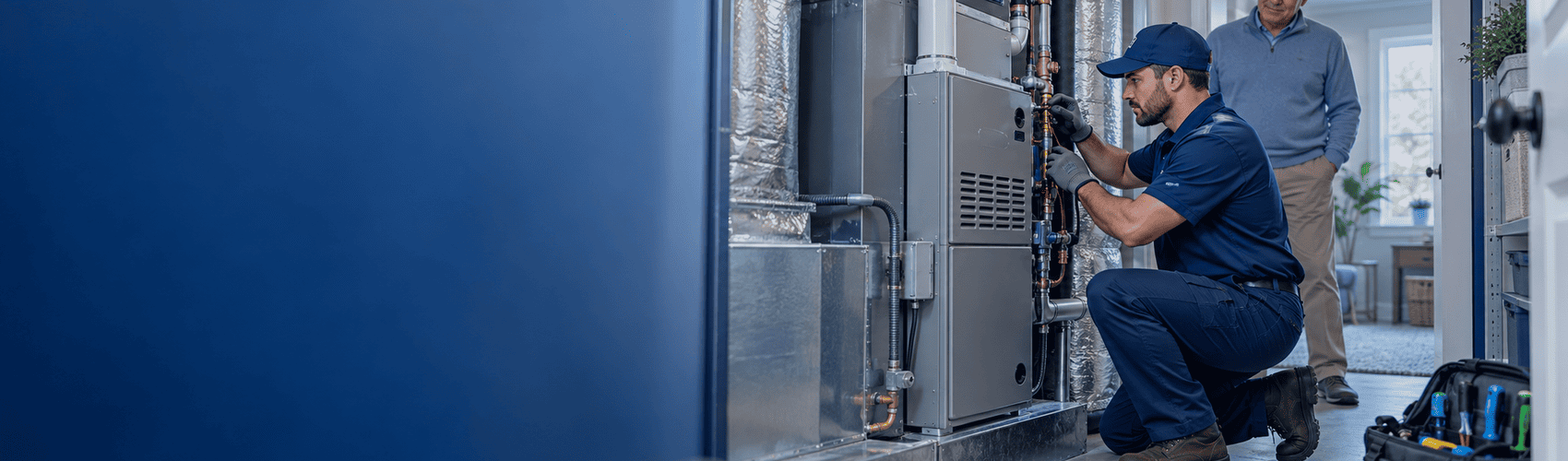
- New Equipment Placement: The new furnace cabinet is hoisted into position, leveled, and mounted on anti-vibration pads to keep operation whisper-quiet.
- Utility & Duct Connections: Technicians connect supply and return plenums, hook up gas piping with leak-sealant, wire electrical disconnects, and secure exhaust flue pipes.
- Thermostat Integration: Connecting low-voltage wiring to your smart thermostat or digital wall controls.
- System Commissioning & Testing: Testing gas pressure, verifying flame sensor signals, measuring static airflow pressure, and testing limit switches under full heat.
7. What Should Be Checked Before the Installation Is Finished?
A quality installation isn’t finished just because the furnace turns on and warm air starts coming out of the vents. Before signing off on the job, a technician should complete a thorough safety and performance inspection:
- Gas Leak Testing: Checking every gas joint and fitting with bubble solution or electronic gas sniffers to confirm zero leaks.
- Flue Venting Clearances: Verifying that exhaust flue pipes maintain safe clearances from combustible attic wood framing and vent cleanly through the roof.
- Burner Flame Quality: Confirming gas burners produce a steady, clean blue flame, indicating complete and safe combustion.
- Condensate Drain Protection: Checking that primary drain lines and secondary overflow float switches are properly wired to shut down the unit if a drain ever clogs.
- Safety Limit Testing: Testing high-limit thermal switches to ensure the furnace turns off automatically if airflow is ever blocked.
- Thermostat Calibration: Running full heat cycles from the thermostat to confirm steady temperature control and proper fan delays.
What Should You Ask Before Scheduling Furnace Installation?
Before hiring a contractor to install your new furnace, ask these practical questions to ensure you receive a complete, high-quality installation:
- How was the recommended furnace size determined? Make sure they calculated heat load via Manual J rather than making a guess based on square footage.
- Will my existing ductwork support the airflow of this new furnace? Ask if return grilles or supply plenums require expansion.
- Are municipal mechanical permits and safety inspections included? Verify that the contractor handles City of Carrollton permit requirements.
- Does the quote include removal and disposal of my old furnace? Confirm there are no hidden haul-away fees added to the final bill.
- What safety and airflow testing is performed after installation? Ensure gas leak testing, static pressure checks, and safety limit tests are included.
- What manufacturer and labor warranties cover the system? Clarify parts coverage (typically 10 years upon registration) and the contractor’s labor guarantee.
Schedule Furnace Installation in Carrollton, TX
Installing a new furnace is a major investment in your home’s safety, comfort, and winter peace of mind. You deserve clear answers, precise load calculations, and expert installation craftsmanship backed by decades of local service.
Since 1957, Harlen Johnson HVAC, Plumbing & Electrical has served Carrollton and North Texas homeowners with honest recommendations, master-level craftsmanship, and upfront flat-rate pricing with zero hidden fees. As a dual-licensed provider in HVAC, plumbing, and electrical, our certified installation team handles every phase of your heating upgrade—from load sizing to electrical wiring and gas line connections—under one roof.
If you are planning a new furnace installation in Carrollton, TX, call 972-241-7771 today to schedule an evaluation and get a clear, detailed estimate built around your home’s exact comfort needs!
Frequently Asked Questions
How do I know what size furnace my Carrollton home needs?
Furnace sizing must be determined by a professional Manual J heat load calculation. This test evaluates your home’s square footage, ceiling height, attic insulation depth, window placement, and floor plan layout to select the exact BTU heating capacity required.
How long does a new furnace typically last?
With proper annual maintenance and regular air filter changes, a modern gas or electric furnace typically lasts 15 to 20 years in North Texas homes.
Can I install a new furnace myself or do I need a licensed professional?
Furnace installation requires specialized licensing due to high-voltage electrical wiring, natural gas piping, carbon monoxide exhaust venting, and municipal permitting requirements. DIY installation is unsafe, violates local mechanical codes, and voids equipment warranties.
Do I need to replace my air conditioner at the same time as my furnace?
Not always, but replacing both units at the same time ensures matched system components, optimized blower motor efficiency, and shared labor costs. If your AC unit is over 10 to 12 years old, replacing both together prevents needing a second replacement job shortly down the road.
Does furnace installation require a permit in Carrollton, TX?
Yes. The City of Carrollton requires a mechanical permit for furnace equipment replacements. A licensed contractor manages permit filing and schedules municipal inspections to verify proper gas piping, electrical wiring, and exhaust venting safety.