 Schedule a Service


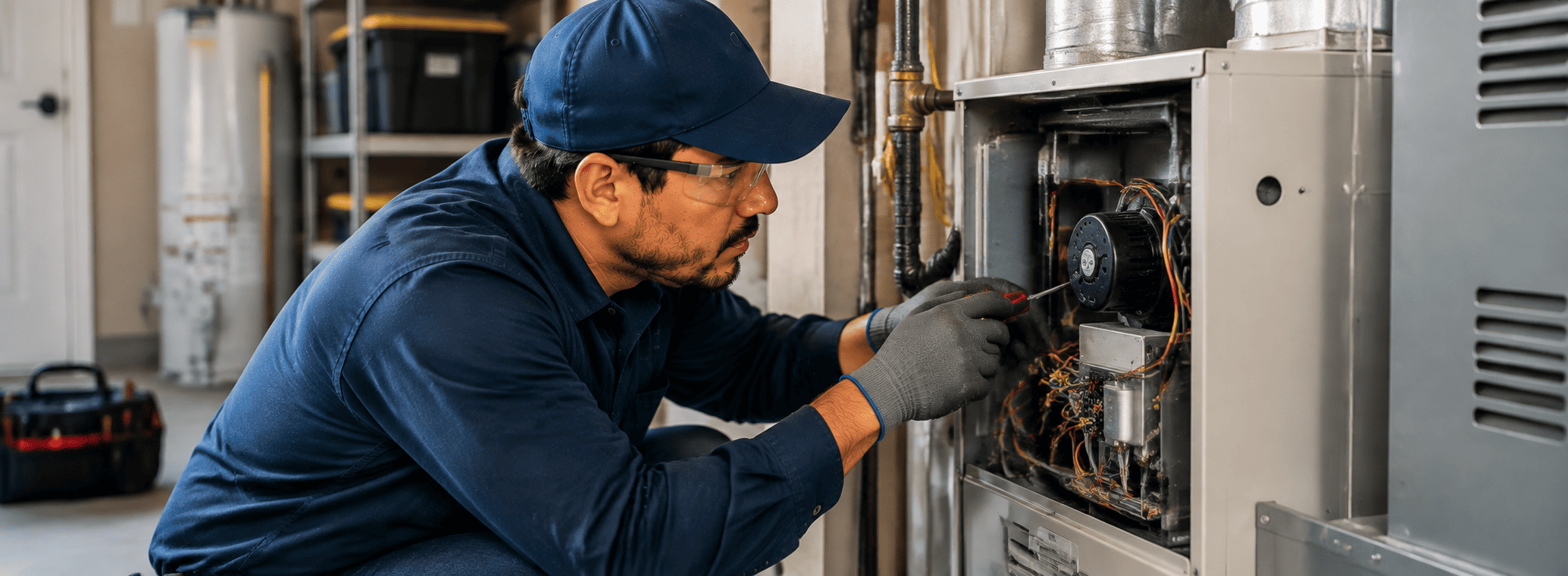
A heating system typically needs professional service when it stops producing warm air, cycles too frequently, creates uneven temperatures, makes unfamiliar noises, or repeatedly trips a circuit breaker. Smoke, persistent burning odors, suspected gas leaks, and carbon monoxide alarms require immediate action.
Harlen Johnson HVAC, Plumbing & Electrical provides heating repair Allen TX homeowners and businesses can request for furnaces, heat pumps, thermostats, blower motors, airflow problems, electrical failures, and other heating concerns.
HJAC has served North Texas since 1957 and offers same-day and 24/7 emergency HVAC support. Call 972-241-7771 or schedule heating service online.
Heating Problems in Allen: Quick Answers
| What you notice | Possible cause | Recommended action |
| No heat | Thermostat, electrical, ignition, or equipment failure | Check the thermostat and breaker, then request service |
| Cool air from vents | Thermostat, ignition, heat pump, or heating-element problem | Confirm the settings and monitor the temperature |
| Weak airflow | Dirty filter, blower problem, or duct restriction | Replace the filter and inspect accessible vents |
| Frequent cycling | Restricted airflow, thermostat, overheating, or sizing problem | Schedule an inspection |
| Constant operation | Heat loss, airflow restriction, or equipment problem | Request service if the property does not warm up |
| Unusual noises | Loose, worn, or damaged component | Turn off the system if the noise is severe |
| Burning odor | Dust, overheating motor, wiring, or electrical failure | Turn off the equipment if the odor persists |
| Repeated breaker trips | Motor, wiring, or electrical component problem | Leave the breaker off and request service |
Key Takeaways
- Check the thermostat, air filter, circuit breaker, and vents before requesting heating repair.
- Do not open equipment panels or attempt electrical, gas, refrigerant, or ignition repairs.
- A heat pump may temporarily produce cooler air during a normal defrost cycle.
- Weak airflow, short cycling, unusual noises, and uneven heating can indicate developing problems.
- Stop using the system if it produces smoke, persistent burning odors, or repeated breaker trips.
- Leave the property immediately if you suspect a gas leak or a carbon monoxide alarm activates.
- HJAC provides heating service for homes and businesses throughout Allen and the Dallas Metroplex.
1. Your Heating System Does Not Turn On
A heater that does not start may have an incorrect thermostat setting, interrupted electrical supply, failed control, ignition problem, damaged motor, or internal safety shutdown.
Before requesting service:
- Confirm that the thermostat is set to Heat.
- Set the temperature above the current indoor temperature.
- Replace the thermostat batteries, if applicable.
- Check whether the HVAC circuit breaker has tripped.
- Inspect the air filter and replace it if visibly dirty.
- Confirm that accessible furnace switches have not been turned off accidentally.
You may reset a tripped breaker once when no visible electrical hazard is present. If the breaker trips again, leave it off and request professional service.
Do not bypass safety switches or attempt to repair electrical, gas, refrigerant, or ignition components.
2. Cool Air Comes From the Vents
Cool air from the vents does not always indicate a heating failure. A furnace may briefly circulate unheated air at the beginning or end of a cycle. Heat pumps also deliver air that may feel cooler than air produced by a gas furnace.
Continuous cool airflow may indicate:
- An incorrect thermostat setting
- A dirty air filter
- An ignition or burner problem
- A failed electric heating element
- A heat pump reversing-valve problem
- A refrigerant-system issue
- A thermostat malfunction
- An electrical or control-board failure
- Significant duct leakage
Check whether the thermostat fan is set to Auto. When it is set to On, the blower can circulate air even when the system is not actively heating.
Request service if the vents continue producing cool air and the indoor temperature keeps falling.
3. Some Rooms Remain Colder Than Others
Uneven heating usually means that conditioned air is not being distributed properly or that the property is losing heat in specific areas.
Potential causes include:
- Closed or blocked supply vents
- A clogged air filter
- Leaking or disconnected ducts
- Inadequate return airflow
- Blower performance problems
- Air leakage around doors or windows
- Insulation deficiencies
- Thermostat placement
- Incorrect equipment sizing
Open the supply vents and remove furniture, rugs, curtains, and stored items blocking the returns. Closing multiple vents can disrupt airflow and will not necessarily reduce energy consumption.
If the temperature imbalance continues, the heating equipment, ductwork, airflow, and insulation may require evaluation.
4. The Heating System Short Cycles
Short cycling occurs when heating equipment turns on and off before completing a normal heating cycle.
Common causes include:
- A dirty air filter
- Restricted airflow
- An inaccurate thermostat
- An overheating furnace
- A dirty flame sensor
- A control or electrical failure
- Incorrect equipment sizing
- A heat pump refrigerant-system problem
- A venting or combustion-air concern
Some furnaces shut down automatically when internal temperatures become unsafe. Repeatedly restarting the heater without correcting the underlying problem can increase wear or damage other components.
Schedule heating repair if short cycling continues after checking the thermostat and air filter.
5. The Heating System Runs Constantly
Heating equipment may operate longer during a North Texas cold front. Constant operation becomes a concern when the system cannot reach the thermostat setting or the indoor temperature continues to fall.
Possible causes include:
- A clogged air filter
- Dirty or worn components
- Duct leakage
- Inadequate insulation
- Air leakage
- Thermostat problems
- Heat pump refrigerant issues
- Incorrect equipment sizing
- Declining system performance
Avoid raising the thermostat dramatically. A higher setting will not make most heating systems warm the property faster.
6. The Equipment Makes Unusual Noises
Heating systems make some normal sounds when starting, stopping, and expanding as temperatures change. New, loud, or persistent noises can indicate mechanical, electrical, ignition, or airflow problems.
| Heating-system sound | Possible cause |
| Banging | Loose component, duct expansion, or ignition concern |
| Rattling | Loose panel, debris, or damaged part |
| Grinding | Motor or bearing problem |
| Screeching | Belt, blower, bearing, or moving component |
| Buzzing | Transformer, contactor, motor, or electrical issue |
| Repeated clicking | Ignition, thermostat, relay, or control problem |
| Whistling | Restricted airflow, dirty filter, or duct problem |
| Booming at startup | Delayed ignition or burner-related concern |
Turn off the system if the noise is violent, begins suddenly, or is accompanied by smoke or a burning odor.
7. You Notice Burning or Unusual Odors
A mild dusty smell may occur when a heating system operates for the first time after months of inactivity. Dust on heating components can create a temporary odor that should fade.
Persistent or strong odors require closer attention.
Burning or Electrical Odor
A burning-plastic or electrical smell may indicate overheating wiring, a damaged motor, a failing control, or another electrical problem.
Turn off the heating system and request service if the odor persists or becomes stronger.
Gas or Sulfur-Like Odor
A rotten-egg or sulfur-like smell may indicate a natural gas leak. Do not operate switches, appliances, phones, or ignition sources inside the building.
Leave the property immediately and contact the gas utility or emergency services from a safe location.
Musty Odor
A musty smell may be associated with moisture, dust, filtration, or duct-related concerns. Replace a dirty filter and request an evaluation if the odor continues.
8. Energy Consumption Increases Unexpectedly
Higher energy consumption can occur when heating equipment operates longer because of restricted airflow, duct leakage, worn components, poor insulation, thermostat problems, or declining performance.
Energy use can also increase because of:
- Colder outdoor temperatures
- Higher thermostat settings
- Longer occupancy periods
- Increased use of supplemental heat
- Changes in building use
- Utility-rate changes
Compare consumption from periods with similar weather and occupancy. If energy use continues rising without an obvious cause, an HVAC inspection may identify a heating-system or airflow problem.
Why Is My Heat Pump Blowing Cool Air?
A heat pump transfers heat rather than creating it through combustion. The air from its vents may feel warm but not as hot as air produced by a gas furnace.
A heat pump may also temporarily produce cooler air during a defrost cycle. During defrost, the system reverses its operation to remove ice from the outdoor coil. This process should be brief.
Professional service may be necessary when:
- Cool airflow continues for an extended period.
- The indoor temperature keeps falling.
- Ice remains on the outdoor unit.
- Auxiliary heat does not activate.
- The system repeatedly enters defrost mode.
- The heat pump runs constantly without warming the property.
- Unusual noises accompany the defrost cycle.
Do not remove ice with sharp tools or hot water because this may damage the equipment.
What Heating Problems Can Be Repaired?
Many heating problems can be corrected without replacing the complete system. The appropriate solution depends on the equipment type, diagnostic findings, condition, and parts availability.
Heating repair may address:
- Thermostat and control problems
- Failed capacitors, relays, or contactors
- Blower motor problems
- Electric heating-element failures
- Ignition or flame-sensor problems
- Heat pump reversing-valve concerns
- Refrigerant-system problems
- Loose or damaged electrical connections
- Restricted airflow
- Duct leakage
- Safety-control failures
- Condensate drainage problems
Similar symptoms can result from different component failures. Diagnostic testing should occur before parts are replaced.
Which Heating Systems Can HJAC Service?
HJAC provides heating diagnosis and repair for systems and components such as:
- Gas furnaces
- Electric furnaces
- Heat pumps
- Ductless heating systems
- Thermostats and controls
- Air handlers
- Blower motors
- Electric heating elements
- Ignition components
- Electrical connections
- Airflow and duct systems
The repair process varies by equipment type. A furnace with an ignition problem requires a different diagnostic approach from a heat pump experiencing a refrigerant or defrost issue.
What Happens During a Heating Repair Appointment?
A heating repair appointment generally begins with a review of the symptoms, equipment type, and operating history.
A technician may:
- Confirm thermostat settings and operation.
- Inspect the air filter and available airflow.
- Check electrical connections and controls.
- Examine the furnace, heat pump, or air handler.
- Test motors, capacitors, relays, and safety controls.
- Inspect accessible ignition or heating components.
- Evaluate supply and return airflow.
- Check heat pump operation when applicable.
- Identify the source of the failure.
- Explain the findings and available repair options.
HJAC provides an upfront diagnosis before approved work begins so customers can understand the problem and proposed solution.
Is It Safe to Keep Using a Malfunctioning Heater?
Do not continue operating heating equipment when it shows signs of an electrical, combustion, or mechanical hazard.
Turn off the system and request professional assistance when:
- The circuit breaker repeatedly trips.
- A burning or melting-plastic odor persists.
- Smoke or sparks appear.
- The furnace makes a loud boom when starting.
- The equipment produces violent mechanical noises.
- The heater overheats or repeatedly shuts down.
- A carbon monoxide alarm activates.
- Visible equipment damage is present.
If you suspect a gas leak, leave the property without operating electrical devices and contact the gas utility or emergency services from a safe location.
If a carbon monoxide alarm activates, move everyone outside and contact emergency services. Do not return until the property has been declared safe.
When Is Heating Repair an Emergency?
Emergency heating repair may be appropriate when a malfunction creates a safety hazard, threatens the property, or exposes occupants to dangerously low indoor temperatures.
Urgent situations include:
- No heat during freezing conditions
- A persistent burning or electrical odor
- Smoke or sparks
- Repeated circuit-breaker trips
- Suspected gas leakage
- A carbon monoxide alarm
- Dangerous mechanical noises
- Heating failure affecting temperature-sensitive occupants
HJAC provides 24/7 emergency heating support in Allen. Call 972-241-7771 for urgent assistance.
Should You Repair or Replace Your Heating System?
Repair may make sense when the problem involves one component, compatible parts remain available, and the heating system has otherwise been dependable.
Replacement may be more practical when the equipment requires frequent repairs, cannot maintain comfort, consumes increasing amounts of energy, or needs a major component replacement.
| Repair may make sense when | Replacement may make sense when |
| One repairable component has failed | Several components are deteriorating |
| The equipment has been dependable | Breakdowns are becoming frequent |
| The repair cost is reasonable | The repair requires a substantial investment |
| Compatible parts remain available | Parts are obsolete or difficult to obtain |
| Heating was consistent before the failure | The system regularly struggles to heat the property |
| Energy consumption remains stable | Energy consumption continues to increase |
| The equipment meets the property’s needs | The system is incorrectly sized or inadequate |
The decision should consider equipment age, current condition, repair history, comfort performance, parts availability, energy consumption, and expected remaining service life.
Learn more about whether to repair or replace your HVAC system.
How Much Does Heating Repair Cost in Allen, TX?
Heating repair costs depend on the equipment, failure, required parts, accessibility, diagnostic work, and timing of the service call.
Factors affecting the final price may include:
- The type of heating system
- The cause of the malfunction
- Equipment age and condition
- Replacement-part availability
- Electrical or mechanical damage
- Ignition or control problems
- Heat pump refrigerant-system concerns
- Airflow or ductwork problems
- Emergency or after-hours service
- Whether repair or replacement is necessary
A thermostat adjustment or filter-related correction may be less involved than a motor, control board, heat exchanger, compressor, or major heat pump repair.
An onsite inspection is usually necessary before an accurate estimate can be provided.
How Can You Reduce the Risk of Heating Breakdowns?
Regular maintenance cannot prevent every failure, but it can identify developing problems before peak heating demand.
Homeowners can:
- Inspect the air filter regularly.
- Replace dirty filters with the correct type and size.
- Keep supply and return vents unobstructed.
- Avoid closing multiple supply vents.
- Use consistent thermostat settings.
- Test smoke and carbon monoxide alarms.
- Address unusual sounds or odors promptly.
- Schedule heating maintenance before winter.
- Have recurring airflow or temperature problems evaluated.
- Avoid opening equipment panels or attempting electrical or gas repairs.
Why Choose HJAC for Heating Repair in Allen?
Harlen Johnson HVAC, Plumbing & Electrical has served North Texas since 1957. HJAC provides heating diagnosis, repair, maintenance, installation, replacement, and emergency support for Allen homes and businesses.
HJAC offers:
- Same-day service availability
- 24/7 emergency HVAC support
- Stocked service trucks
- Upfront diagnosis before approved work
- Residential and commercial heating service
- Furnace and heat pump solutions
- Repair and replacement options
- Financing for qualifying installations and replacements
- HVAC, plumbing, and electrical services from one company
- Discounts for veterans, senior citizens, and teachers
Explore HJAC’s HVAC services in Allen, TX.
Frequently Asked Questions About Heating Repair in Allen, TX
Why is my heater running but not producing warm air?
A heater may run without producing warm air because of an incorrect thermostat setting, clogged filter, ignition problem, failed heating element, thermostat malfunction, heat pump issue, or electrical failure.
Why does my heater blow cold air before warming up?
A furnace may briefly circulate unheated air before its heating components reach operating temperature. A heat pump may also deliver air that feels cooler than furnace air. Continuous cold airflow can indicate a system problem.
Why does my heating system keep turning on and off?
Frequent cycling can result from a dirty filter, restricted airflow, thermostat problem, overheating furnace, electrical fault, incorrect equipment sizing, or heat pump refrigerant issue.
Should I turn off a heater that smells like it is burning?
Turn off the heater if a strong burning or electrical odor persists. A temporary dusty smell may occur when the system first starts after inactivity, but an ongoing odor may indicate overheating or damaged components.
What should I do if I smell gas?
Leave the property immediately. Do not operate switches, appliances, phones, or ignition sources inside the building. Contact the gas utility or emergency services from a safe location.
Why is only one room in my home cold?
A single cold room may result from a blocked vent, damaged duct, inadequate insulation, air leakage, or airflow imbalance. Request an evaluation if opening the vent and removing obstructions does not correct the problem.
How often should a heating system be serviced?
Many heating systems benefit from professional maintenance once a year, preferably before seasonal heating demand begins. The appropriate schedule may vary according to the equipment and manufacturer guidance.
Does HJAC repair furnaces and heat pumps?
Yes. HJAC diagnoses and repairs furnaces, heat pumps, thermostats, air handlers, blower components, controls, and related heating-system problems.
Does HJAC provide emergency heating repair in Allen?
Yes. HJAC provides 24/7 emergency HVAC support for urgent heating problems in Allen, Texas. Call 972-241-7771 for assistance.
Schedule Heating Repair in Allen, TX
If your heater produces cool air, short cycles, creates uneven temperatures, makes unfamiliar noises, or cannot maintain the thermostat setting, Harlen Johnson HVAC, Plumbing & Electrical can identify the cause and explain the available solutions.
For professional heating repair Allen TX homeowners and businesses can request, call 972-241-7771 or schedule service online today.